
Vtama Side Effects & Age Approval: What You Need to Know
speciality medications
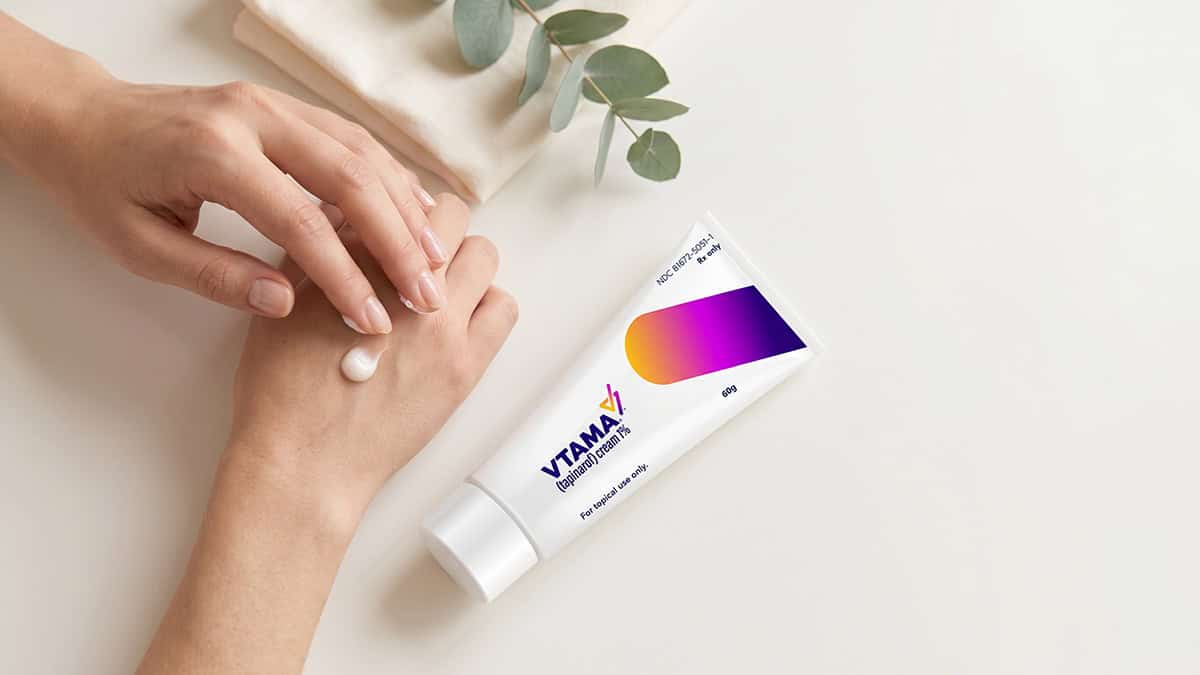
Starting a new skin medication often comes with a few immediate questions:
What side effects should I expect?
… And is this safe for my age group?
These questions probably feel familiar to you regardless of the medication label you’re currently staring at.
But, if you’ve been prescribed Vtama Cream, you probably have a few more specific questions in mind.
Vtama (tapinarof) is a newer prescription treatment for plaque psoriasis.
New plaque psoriasis medications can be very exciting. They tend to be powerful and can come with fewer symptoms than older medications in the same genre.
That said, with newer medications often comes a bit of uncertainty.
If you’re uncertain or even concerned about using Vtama, you’re not alone. Many (many!) patients search for “vtama side effects” or “vtama age approval” to better understand whether it’s the right fit for them or whomever in their life needs it.
Here’s the good news:
Vtama is a non-steroidal option for managing psoriasis, which is something many patients and clinicians have been looking for. It works differently from traditional topical steroids and may be used as part of a longer-term treatment plan, depending on your specific situation.
Here’s even more good news!
In this guide, we’ll provide clear, non-jargony info to help you feel confident knowing:
- What Vtama is used for
- How it works in simple terms
- Common and less common side effects
- Age approval and who can safely use it
- What to expect during treatment
… and even an idea of the best international and Canadian prescription drugstores and ways to buy Vtama for less (perhaps even up to 53% less when compared to American brick and mortar pharmacy retail prices).
Let’s get started.
What Is Vtama Cream Used For?
Vtama is a prescription topical cream used to treat plaque psoriasis, a chronic skin condition that causes red, scaly patches on the skin. These plaques can appear on areas like the elbows, knees, scalp, or trunk and may be itchy, uncomfortable, or persistent.
Many traditional plaque psoriasis treatments – like acitretin – are steroids.
Vtama is not a steroid.
It offers a different approach to managing inflammation and skin changes associated with psoriasis.
With Vtama, you may be able to avoid some of the downsides often associated with steroidal treatment (like skin thinning, stretch marks, spider veins, and breakouts) while still noticing improvement in symptoms like:
- Redness and inflammation
- Scaling or flaking skin
- Itching or irritation
- Thickened plaques
Because it is non-steroidal, Vtama is often considered in situations where long-term steroid use may not be ideal or when patients are looking for alternative options.
Vtama does not cure psoriasis, though.
Like most treatments for chronic skin conditions, it helps manage symptoms and improve skin appearance over time. To get that benefit long-term, you might need to take Vtama long-term.
This isn’t necessarily a bad thing, just something to know before you get started with this medication.
Here’s How Vtama Works (In Simple Terms)
To understand how Vtama works, it helps to know that psoriasis is driven by an overactive immune response in the skin.
This overactive immune response leads to inflammation and causes skin cells to grow and build up more quickly than normal.
Generally, the idea with many plaque psoriasis meds is to modulate that overactive immune inflammatory response.
Vtama is no different.
Vtama accomplishes its anti-inflammatory goals by interacting with a pathway in the body known as the aryl hydrocarbon receptor (AhR) pathway.
While that sounds complex, the key idea is simple.
Vtama helps regulate how skin cells behave and how the immune system responds … within the skin.
In other words, instead of attacking plaque psoriasis at the skin level with topical options (that do work for many!), Vtama takes things a bit deeper. Because it targets underlying processes in the skin, rather than just moisturizing or suppressing symptoms, Vtama offers a different kind of support compared to many over-the-counter products.
In practical terms, this means Vtama can help:
- Reduce inflammation
- Slow down the buildup of skin cells
- Improve the overall appearance of plaques
Vtama Side Effects: What Patients Should Expect
We have even more good news for you:
Most side effects reported with Vtama are mild, localized, and manageable.
Vtama is applied directly to the skin.
This means that any side effects that patients do experience with Vtama typically occur only in the areas where the cream is used, rather than affecting the whole body.
The most frequently reported side effect with Vtama is folliculitis.
Folliculitis is not fun, but it’s generally manageable and temporary (when it’s a medicinal side effect). Folliculitis refers to small, pimple-like bumps that form around hair follicles. These bumps can look similar to mild acne.
Other common side effects associated with Vtama may include:
- Mild redness at the application site
- Itching
- A slight burning or stinging sensation when first applied
These reactions are generally mild and often improve as your skin adjusts to the medication.
Less Common Vtama Side Effects
Some patients may experience less common reactions after using Vtama such as:
- Skin irritation beyond the treated area
- Increased sensitivity in the skin
- Acne-like breakouts
While these effects are less typical, they can occur, especially in individuals with more sensitive skin or when starting treatment.
Although most Vtama Cream side effects are mild, it’s important to check in with your healthcare provider if you notice:
- Persistent or worsening irritation
- Significant discomfort at the application site
- Signs of infection, such as swelling, warmth, or discharge
- Skin changes that don’t improve over time
If you have noticed these or any other side effects that you do not like or need to change, don’t be afraid to talk to your doctor. Your doctor will help you figure out ways to confirm that these side effects are associated with Vtama and then assist with a plan to reduce side effects as needed.
Vtama Cream Side Effects vs Topical Steroids

One of the reasons people tend to prefer Vtama (when compared to traditional topical steroids, specifically) is because it comes with a different side effect profile.
Long-term or frequent use of topical steroids can sometimes lead to …
- Thinning of the skin
- Stretch marks in certain areas
- Increased skin fragility
- Potential rebound symptoms when stopped
Vtama does not carry the same steroid-related risks.
Vtama Age Approval: Who Can Use It?
People of all ages, young to old, have plaque psoriasis to deal with.
Which means, of course, that they both need and deserve high-quality medications that can provide lasting relief.
Vtama’s age approval has people wondering, though:
Who is this medication actually intended for?
Vtama is approved for use in adults with plaque psoriasis.
This means it has been studied and evaluated for safety and effectiveness in adult patients, and that’s the population it is most commonly prescribed for.
Let’s take a step back and look at some context, though.
Age recommendations are based on clinical trial data.
When a medication is newer, there may be less data available for certain groups, such as children or adolescents, which is why approvals often start with adult use.
This does not mean it’s objectively unsafe for use in children.
This just means we don’t have as much data telling us what happens when it’s used in children.
For you, this means:
If you’re an adult, talk to your doctor to see if Vtama is a good match for you and your needs.
If you’re a child (or are working to get medication for a child), talk to their doctor to see if Vtama is a good match for them and their needs!
Vtama Age Considerations: What Parents Should Know
Let’s say your pediatrician or your child’s dermatologist has recommended Vtama for your child.
Skin in younger patients can be more sensitive, and any medication dosing or application strategies will likely need to be adjusted to be right for your individual child.
While Vtama is approved for adult use, in some case-by-case situations, with close medical supervision, dermatologists might recommend it for children.
A lot of factors go into that sensitive decision.
Those factors may include:
- The severity of a child’s psoriasis
- The areas of the body affected
- How the condition is impacting quality of life
- Response to other treatments
Just remember this:
Psoriasis treatment in children should always be guided by a healthcare professional with experience in pediatric care.
Even when a medication is effective in adults, it may not automatically be the first choice for younger patients.
Your Startup Guide: How to Use Vtama Cream Safely
Using Vtama correctly can help reduce the risk of side effects and improve results over time.
Here’s a quick four-step primer on how to make that happen:
- Apply a thin layer of Vtama to affected areas once per day (unless your doctor has directed otherwise, in which case, talk to your doctor).
- Use only on areas with psoriasis, again, unless instructed otherwise.
- Wash your hands after applying the cream.
- Avoid contact with eyes, mouth, and other sensitive areas!
Also know this:
Consistency matters.
Even if you’re only seeing gradual improvements, using the medication exactly as it’s prescribed is giving Vtama the best possible chance to work hard for you.
It can also be really helpful to keep track of how your skin responds over time.
Noting down in a phone note or physical notebook any improvements (or any irritation or side effects!) can make follow-up visits with your provider easier and more productive.
How Long Does It Take for Vtama to Work?
When you’re evaluating how a new medication works for you, it’s pretty important to set expectations.
One such expectation is, of course, timing.
Vtama does not work overnight, and its results tend to appear gradually.
Many patients begin to notice improvements in skin redness, scaling, and overall plaque appearance only over the course of several weeks.
That’s important to know.
Why?
It’s important to continue using Vtama as prescribed, even if results are not immediate.
Stopping too early can make it harder to see the full benefit of the treatment.
So, if you know upfront that you may need to take Vtama for several weeks before seeing the full effects of the drug, you’ll have a better chance of sticking through your medication adherence to actually realize those benefits.
And, on the other side, of course: If you’ve been taking the medication for several weeks with no benefits at all, it might be time to talk to your doctor about possible alternative options.
Stuck on Ideas? Here Are Questions to Ask Your Doctor About Vtama

Preparing for a plaque psoriasis consultation with your doctor can feel unnerving.
Having a bit of a script for that consultation can make going to it easier – and getting precisely what you need out of that consult much more possible.
Here are a few focused questions that can help you clarify how Vtama might fit into your treatment plan:
- Is Vtama the right option for my type and severity of psoriasis?
- What side effects should I watch for, and how common are they?
- How long should I use it before evaluating results?
- Can it be combined with other treatments if needed?
- Are there alternative options if I don’t tolerate it well?
Finally, Here’s What to Know Before Starting Vtama
Vtama is a new approach to treating plaque psoriasis.
For some patients, it may offer fewer downsides than more traditional steroidal treatment.
It can help by regulating a person’s inflammatory response without use of steroids. This can make it a very intriguing option for long-term plaque psoriasis management.
Vtama side effects are possible, of course. But they are typically mild and limited to wherever you put it on your body. Knowing that going in can help you feel more confident about using Vtama in the first place!
Here’s something else that can give you more confidence using Vtama: Knowing where to buy it so that your plaque psoriasis treatment doesn’t break the bank.
Here, through NorthWestPharmacy.com, you can buy a 60g of Vtama Cream for about $700.00 – savings of up to 53% when compared to typical American retail prices.
Once you have a valid, updated prescription for Vtama Cream from your healthcare provider, reach out to NorthWestPharmacy.com to learn more about Vtama Cream or ask any questions that may be on your mind.
We look forward to supporting you and your healthcare journey.


